The blend
Rapeseed and coconut wax in a ratio we settled on in 2016, after four years of trying to make soy behave in a straight-sided vessel. No paraffin, no stearin, no dye. The wax is off-white because that is the colour it is.
A candle is a simple object made of three things that all want to behave differently. Most of what follows is about giving them time.
Rapeseed and coconut wax in a ratio we settled on in 2016, after four years of trying to make soy behave in a straight-sided vessel. No paraffin, no stearin, no dye. The wax is off-white because that is the colour it is.
Every scent gets its own wick, and every vessel size gets its own again. A candle that tunnels has the wrong wick, not the wrong owner. Trials run for six weeks before a scent goes into production.
Poured at 62°C into vessels warmed to room temperature. Cold glass is the single most common cause of the wet spots people mistake for a fault, and warming the vessels costs nothing but patience.
Wax contracts as it sets and leaves a well around the wick. We pour a second, thinner layer into that well the next morning, which is why the surface is flat and why a candle takes two days rather than one.
Four weeks on a rack in the dark at 18°C. The scent binds to the wax over that time; a candle burned in week one smells thinner than the same candle in week five, which is the whole argument for curing.
Wicks trimmed to 5mm, vessels wiped, labels applied by hand, and a burn card in every box. Anything with a visible flaw goes to the seconds shelf in the Pantin workshop rather than into a box.
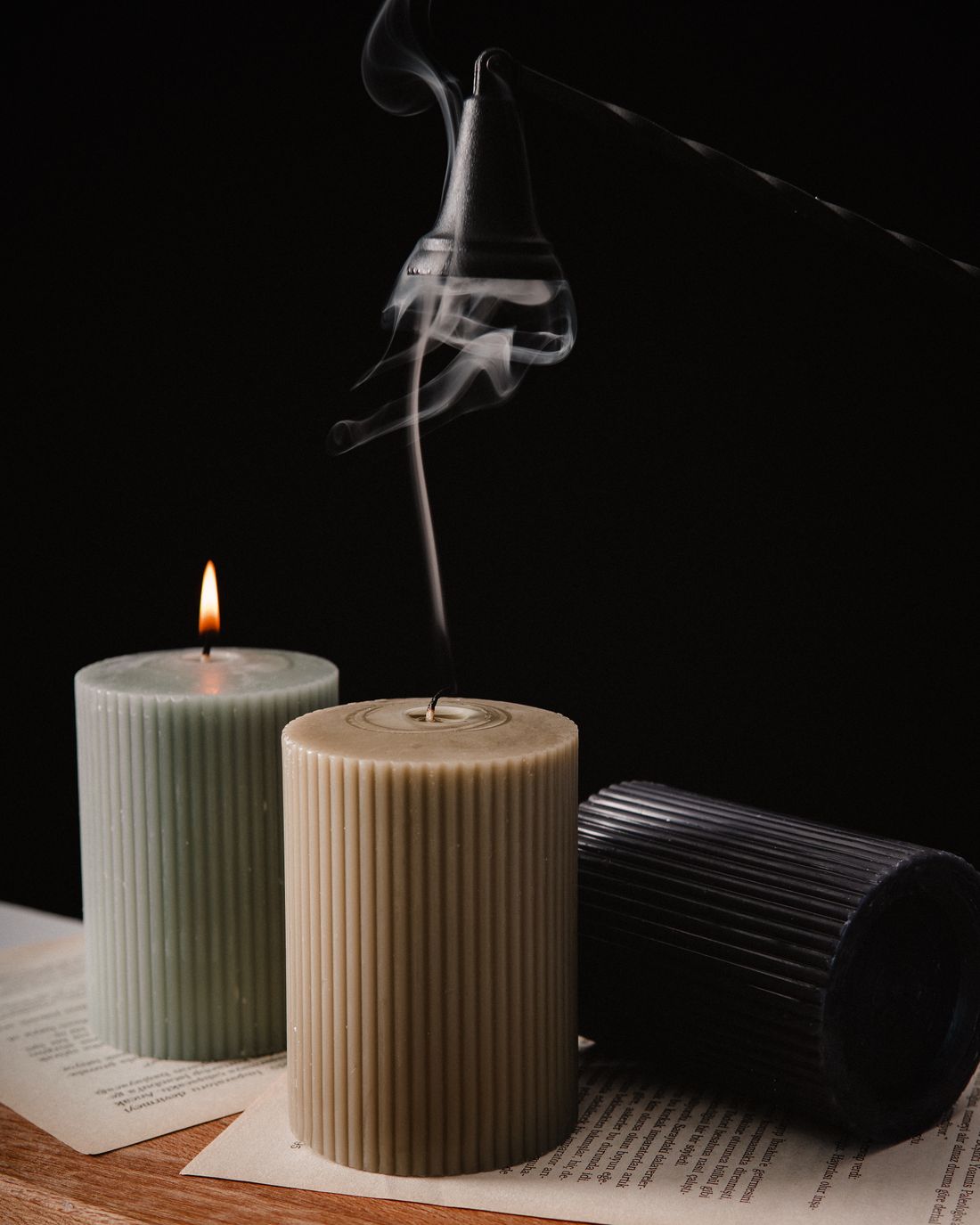
Every box carries this on a card, because it is the difference between fifty hours and thirty.
Rapeseed grown in France and coconut wax from the Philippines. No paraffin.
Unbleached cotton, no lead or zinc core, sized per scent and per vessel.
Blended in Grasse to our formulas, at 8 to 10 per cent depending on the scent.
Glass pressed in the Loire, designed to be washed out and poured again.